Problem:
Rocking warehouse slabs under constant, heavy forklift traffic are more than just an annoyance—they are a safety hazard, a liability, and bottleneck daily operations. This manufacturing facility in Cheyenne, Wyoming had experienced areas of subgrade void and loss of support soils beneath their warehouse slabs, causing them to rock when forklifts run over the areas. With manufacturing operations in full swing, the owners of the facility needed a fast and non-invasive repair that would stabilize the slabs and provide a long-term, durable repair of the areas in order to keep operations going, avoiding any lengthy downtime or closure, and keep heavy forklift traffic moving safely. The facility owners reached out to Legacy Construction, a highly respected local general contractor who in turn contacted Concrete Stabilization
Technologies, Inc. (CST) for a solution.
Solution:
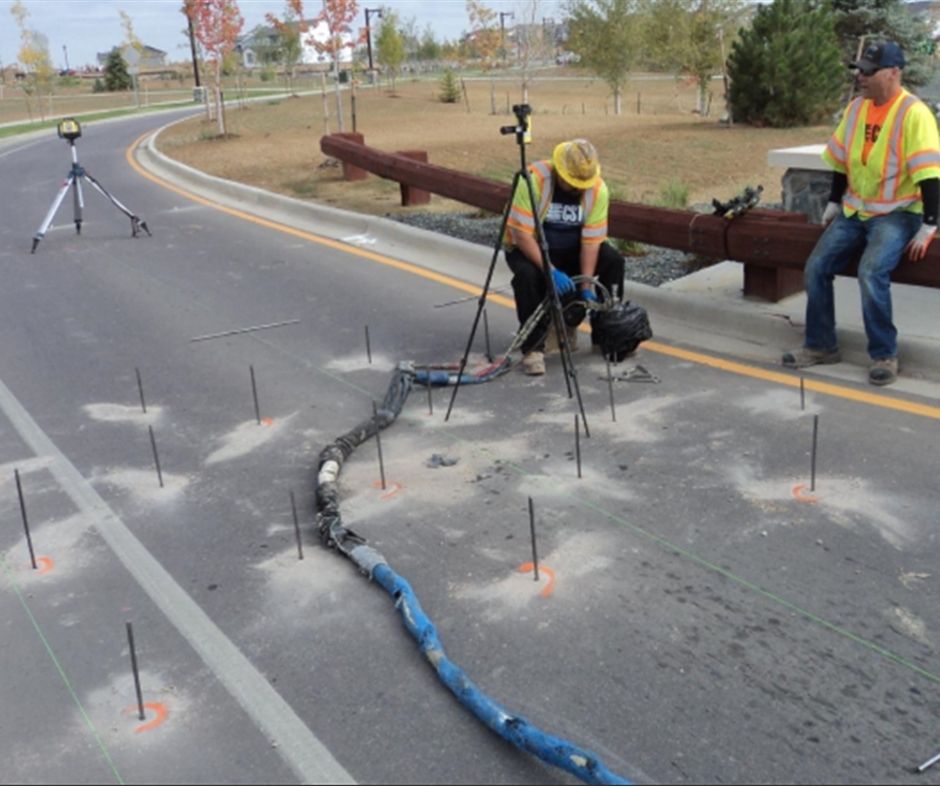
CST quickly mobilized to the facility and performed a thorough assessment of the slabs. Coordinating with Legacy Construction, and accommodating the facility’s scheduling requirements, CST returned to the site to repair the areas using our advanced Expanding Structural Polymer (ESP) injection technology. Crews staged lasers and monitoring equipment in the areas to be injected to ensure no lifting of the slabs occurred during the stabilization process. Next we drilled small 5/8” holes through the slabs and injected ESP into the weakened areas and directly beneath the slabs to re-compact the soil and re-establish under-sealing while “stitching” at the control joints between the slabs. Areas were then tested, driving forklifts over them while monitoring for rocking and movement. Once all areas were thoroughly stabilized, the injection holes were filled with a fast-curing non-shrink grout and the areas cleaned of all injection debris.
Results:
CST repaired the rocking slabs quickly and without any excavation or disruption to the facilities operations. No heavy equipment was required inside the facility. Any dust from drilling the injection holes was contained, leaving zero residue or mess within the facility. The repairs to three 12’ x 12’ the floor slabs and approximately 60 feet of control joint were completed in less than 3 hours. All areas were immediately usable once injections were completed.